CSE 447: Natural Language Processing, Fall 2025
MWF 11:30-12:20pm, CSE2 G10 (Gates, ground floor)
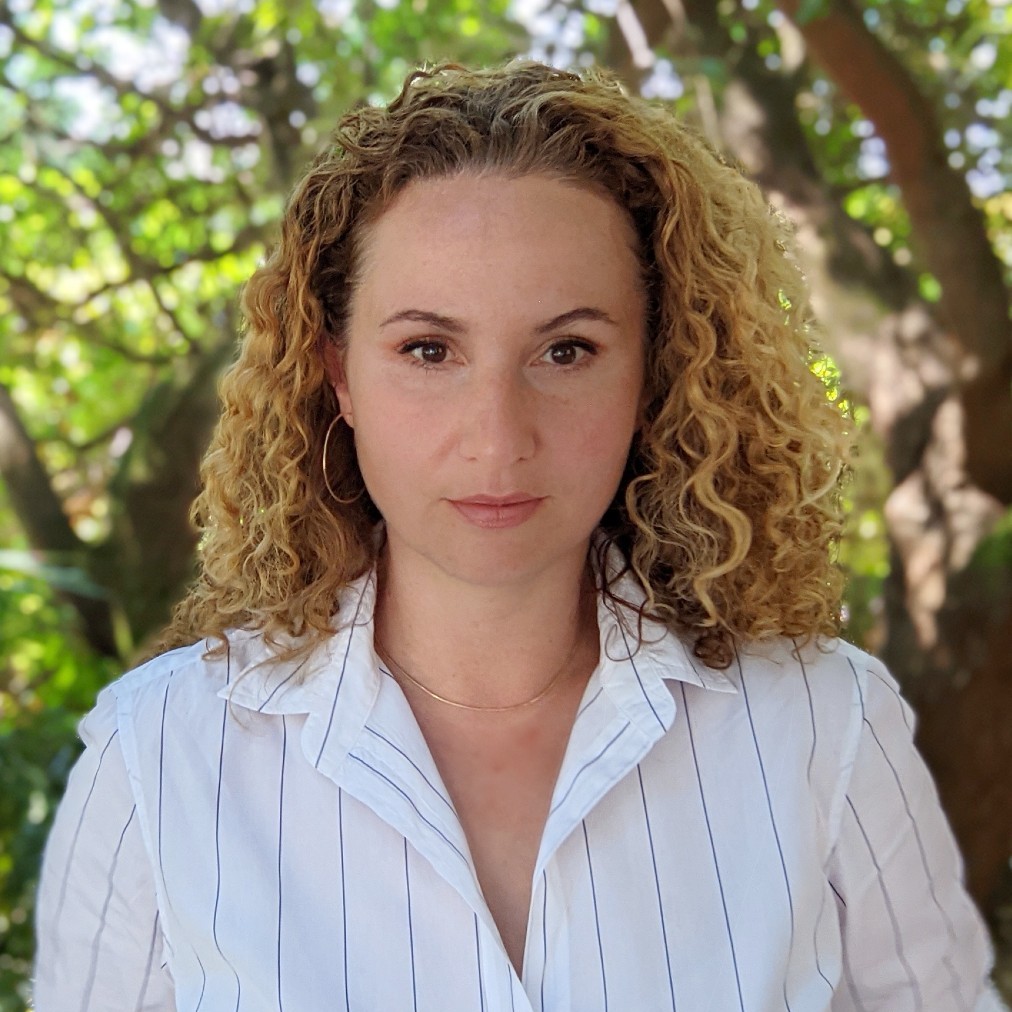

Head Teaching Assistant: Melanie Sclar
OH: Fri 9:30-10:30am, CSE1 220, Zoom.
DEC 5TH OFFICE HOUR HAS BEEN CANCELED.




Announcements
- Project 3 is now out! [11/18/2025] Handout Part a Notebook Part b Notebook Tex Source for Writeup Due: 12/05/2025
-
Project 2 is now out! [10/27/2025] Handout Part a Notebook Part b Notebook Tex Source For Writeup
-
We have extended Project 1’s deadline (HW1) to 10/27.
-
Due to the Canvas outage on 10/20, we have postponed Quiz #2 to Wednesday.
-
Project 1 is now out! [10/02/2025] Handout Part a Notebook Part b Notebook
- Project 0 is now out! [09/26/2025] Handout Notebook
Summary
This course covers methods for designing systems that intelligently process natural language text data. Topics include language models, text categorization, syntactic and semantic analysis, and machine translation, with an emphasis on algorithms and data-driven methods. The course is hands-on and project-based, focusing on building and evaluating practical NLP systems.
Prerequisites
CSE 312 and CSE 332; recommended: MATH 208. CSE 446 is recommended before or concurrently.
Calendar
Calendar is tentative and subject to change. More details will be added as the quarter continues.
| Week | Date | Topics | Readings | Homeworks |
|---|---|---|---|---|
| 1 | 9/24 |
Logistics
[slides] |
Course website, syllabus | |
| 9/26 |
Introduction
[slides] |
Optional reading J&M (2nd ed) 1; Optional reading NYT Interview with Yejin Choi | HW0 out | |
| 2 | 9/29 |
Introduction
[slides] |
Eis 2; J&M III 4 | |
| 10/1 |
Text classification
[slides] |
Eis 2; J&M III 4 | ||
| 10/3 |
Text classification
[slides] |
Eis 2; J&M III 4; Ng & Jordan, 2001 | HW0 due; HW1 out | |
| 3 | 10/6 |
Text classification
[slides] |
J&M III B; Pang et al. 2002 | in-class quiz 1 |
| 10/8 |
Text classification
[slides] |
|||
| 10/10 |
CANCELED
|
|||
| 4 | 10/13 |
Text classification
[slides] |
J&M III 4 | |
| 10/15 |
Text classification
[slides] |
J&M III 4 | ||
| 10/17 |
Text classification
[slides] |
J&M III 4 | ||
| 5 | 10/20 |
Language modeling
[slides] |
J&M III 3; Eis 6.1-6.2, 6.4 | |
| 10/22 |
Language modeling
[slides] |
J&M III 3; Eis 6.1-6.2, 6.4 | in-class quiz 2 [moved due to Canvas outage] | |
| 10/24 |
Language modeling
[slides] |
J&M III 3; Eis 6.1-6.2, 6.4 | ||
| 6 | 10/27 |
Distributional Semantics
[slides] |
J&M III 5 | HW1 due; HW2 out; in-class quiz 3 |
| 10/29 |
Distributional Semantics
[slides] |
J&M III 5 | ||
| 10/31 |
Distributional Semantics
[slides] |
J&M III 5 | ||
| 7 | 11/3 |
Neural networks
[slides] |
J&M III 6 | in-class quiz 4 |
| 11/5 |
Transformers
[slides] |
J&M III 8; Attention Is All You Need | ||
| 11/7 |
Transformers and Pre-training
[slides] |
J&M III 8; J&M III 10; Attention Is All You Need | ||
| 8 | 11/10 |
Pre-training
[slides] |
J&M III 10; BERT; | in-class quiz 5 |
| 11/12 |
Pre-training + Decoding
[slides] |
J&M III 12 | ||
| 11/14 |
Post-training
[slides] |
J&M III 9 | ||
| 9 | 11/17 |
LLMs - prompting, Chain of Thought (CoT)
[slides] |
Schulhoff et al., 2024 | in-class quiz 6; HW2 due |
| 11/19 |
Frontiers of LLM Reasoning and Evaluation
[slides] |
|||
| 11/21 |
Computational Social Science
[slides] |
|||
| 10 | 11/24 |
LLM Safety
[slides] |
Risks of LLMs; SafetyPrompts; The Art of Saying No | in-class quiz 7 (last quiz!) |
| 11/26 |
CANCELED (Thanksgiving)
|
|||
| 11/28 |
CANCELED (Thanksgiving)
|
|||
| 11 | 12/01 |
NLP in Industry
[slides] |
||
| 12/03 |
AI Ethics
[slides] |
Political Bias in LLMs; Biased LLMs can Influence Decision Making | ||
| 12/05 |
|
HW3 due |
Resources
- Readings
- Ed discussion board
- Canvas
- Gradescope
Assignments/Grading
- Project 0 (Python and Pytorch Tutorial / Review): Optional, Extra 2% Credit. Handout Notebook
- Project 1 (Text Classification and N-gram language models): 30% Handout Part a Notebook Part b Notebook
- Project 2 (Neural Text Classification and Neural Language Modeling)*: 30% Handout Part a Notebook Part b Notebook Tex Source For Writeup
- Project 3 (Transformers and Natural Language Generation)*: 30%
- Quizzes: 10%
- Starting from the 3rd week, we will have quizzes on Mondays (unless announced otherwise).
- There will be 7 quizzes in total.
- Quizzes will be released 10 minutes in the beginning of the class.
- 5 best quizzes will be counted into final score. Each quiz will occupy 2% of final score.
- Quizzes will be closed-book. We will use Canvas’ functionalities to monitor this.
- As explained in class, quizzes may only be taken in-person, to test your understanding of class materials and encourage you to attend and review lectures. From November 10th onwards, will enforce this by giving you an access code at the beginning of the class.
- Participation: 6% bonus
*Subject to change based on factors like class performance, compute feasibility, and topics covered during the course.
Policies
-
Late policy. Each student will be granted 5 late days to use over the duration of the quarter. You can use a maximum of 3 late days on any one project. Weekends and holidays are also counted as late days. Late submissions are automatically considered as using late days. Using late days will not affect your grade. However, projects submitted late after all late days have been used will receive no credit. Be careful!
-
Academic honesty. Homework assignments are to be completed individually. Verbal collaboration on homework assignments is acceptable, as well as re-implementation of relevant algorithms from research papers, but everything you turn in must be your own work, and you must note the names of anyone you collaborated with on each problem and cite resources that you used to learn about the problem. The project proposal is to be completed by a team. Suspected violations of academic integrity rules will be handled in accordance with UW guidelines on academic misconduct.
-
On ChatGPT, Copilot, and other AI assistants (adopted from Greg Durrett): Understanding the capabilities of these systems and their boundaries is a major focus of this class, and there’s no better way to do that than by using them!
-
We strongly encourage you to use ChatGPT to understand concepts in AI and machine learning. You should see it as a another tool like web search that can supplement understanding of the course material.
-
You are allowed to use ChatGPT and Copilot for programming assignments. However, usage of ChatGPT must be limited in the same way as usage of other resources like websites or other students. You should come up with the high-level skeleton of the solution yourself and use these tools primarily as coding assistants.
-
You are permitted to use ChatGPT for conceptual questions on assignments, but discouraged from doing so. It will get some of these questions right and some of them wrong. These questions are meant to deepen your understanding of the course content. Heavily relying on ChatGPT for your answers will negatively impact your learning.
An example of a good question is, “Write a line of Python code to reshape a Pytorch tensor x of [batch size, seqlen, hidden dimension] to be a 2-dimensional tensor with the first two dimensions collapsed.” Similar invocation of Copilot will probably be useful as well. An example of a bad question would be to try to feed in a large chunk of the assignment code and copy-paste the problem specification from the assignment PDF. This is also much less likely to be useful, as it might be hard to spot subtle bugs. As a heuristic, it should be possible for you to explain what each line of your code is doing. If you have code in your solution that is only included because ChatGPT told you to put it there, then it is no longer your own work in the same way.
-
-
Accommodations. If you have a disability and have an accommodations letter from the Disability Resources office, I encourage you to discuss your accommodations and needs with me as early in the semester as possible. I will work with you to ensure that accommodations are provided as appropriate. If you suspect that you may have a disability and would benefit from accommodations but are not yet registered with the office of Disability Resources for Students, I encourage you to apply here.
Note to Students
Take care of yourself! As a student, you may experience a range of challenges that can interfere with learning, such as strained relationships, increased anxiety, substance use, feeling down, difficulty concentrating and/or lack of motivation. All of us benefit from support during times of struggle. There are many helpful resources available on campus and an important part of having a healthy life is learning how to ask for help. Asking for support sooner rather than later is almost always helpful. UW services are available, and treatment does work. You can learn more about confidential mental health services available on campus here. Crisis services are available from the counseling center 24/7 by phone at +1 (866) 743-7732 (more details here).